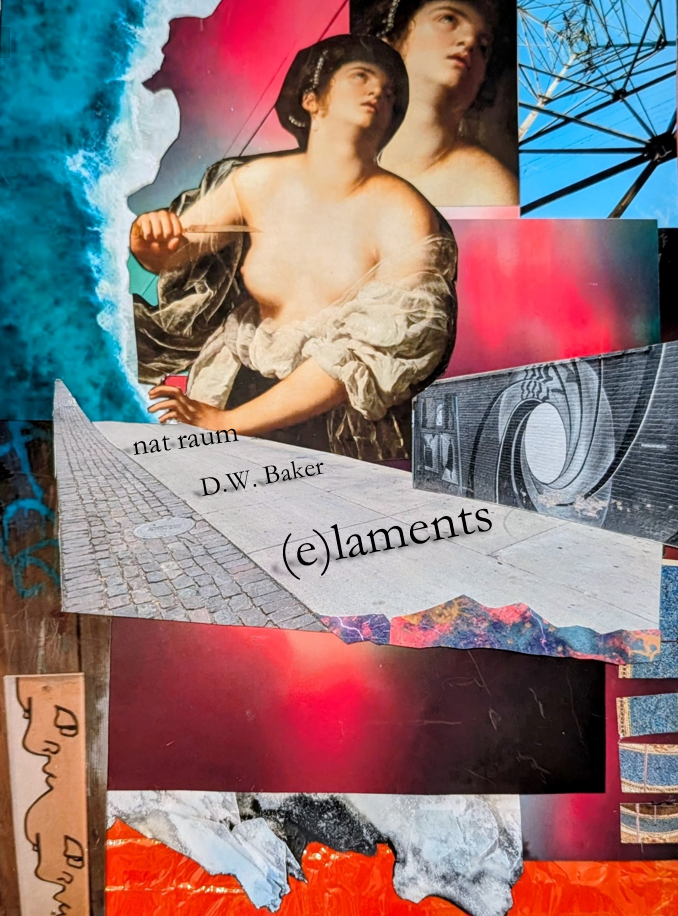
(e)laments(e)laments(e)laments(e)laments(e)laments(e)laments(e)laments(e)laments(e)laments(e)laments(e)laments(e)laments(e)laments(e)laments(e)laments(elaments(e)laments(e)laments
$7
nat raum is a queer disabled artist, writer, and editor based on unceded Piscataway and Susquehannock land in Baltimore. Past publishers of their writing include Split Lip Magazine, Baltimore Beat, Poet Lore, beestung, and others. Find them online at natraum.com.
D.W. Baker is a poet from St. Petersburg, Florida. His short form work appears with Version (9) Magazine, ballast, Modern Haiku, The Ekphrastic Review, horror senryu journal, and others. In 2023, a poem he co-authored with Stephanie M. Holden was the winner of Sundog Lit’s annual collaboration contest. See more of his work at www.dwbakerpoetry.com
“(e)laments is an experiment in the potential of the haibun, a Japanese form originated by 17th-century haiku master Bashō that utilizes the dynamism between two conversant parts––one verse, one prose. Baker and raum demonstrate what the haibun makes possible beyond its inherent juxtaposition: these poems’ halves illuminate another, in both form and content. As they interrogate the fluidity of body and identity (“i am a force which inundates & washes away”), often partaking in the kind of “self-erasure” T.A. Greathouse offers in their form, the “burning haibun” these poems are both whole and partial. (e)laments is a feat of simultaneity.”
Jane Huffman, author of Public Abstract
$7
From the Authors
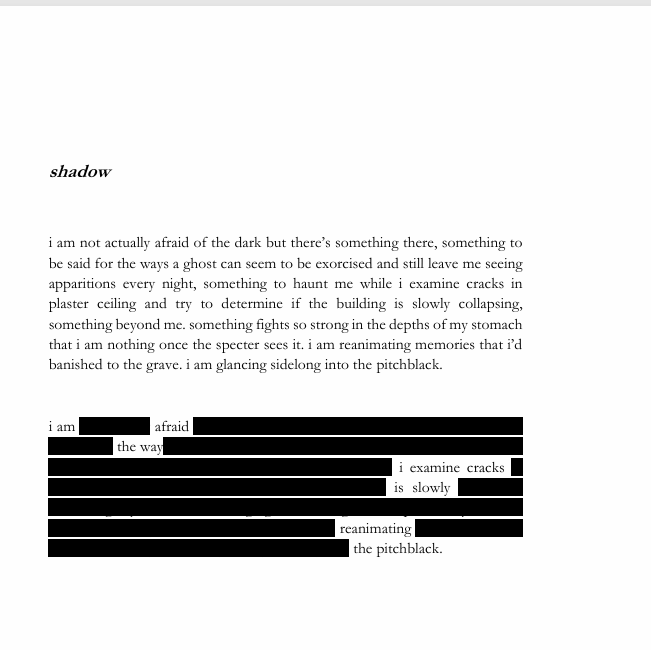
The traditional haibun is a Japanese literary form composed in two parts: a short prose poem or narrative, typically personal and/or place-oriented, followed by a haiku.
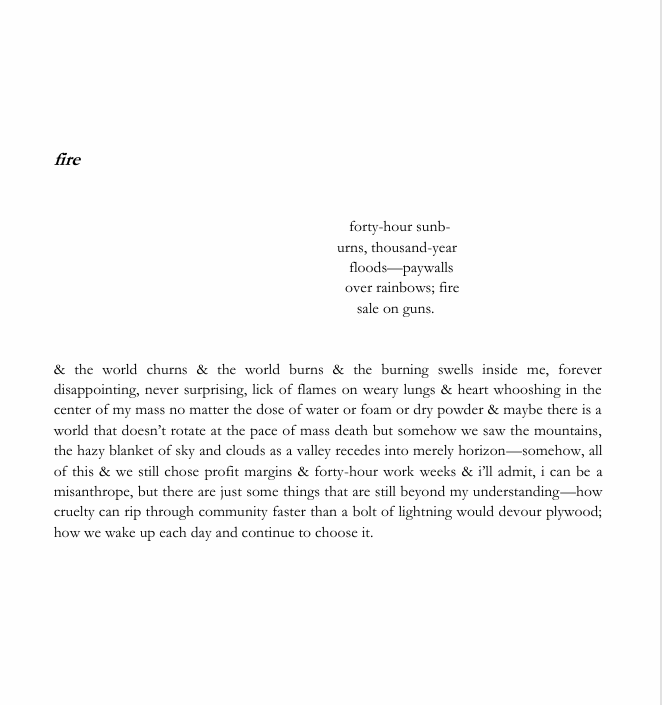
The prose poems in (e)laments explore structure at their core, with particular attention to rhythm and euphony so as to pair seamlessly with the meter of the micropoetry. Their subject matter forms the titular “laments”—the various instances of the speaker’s anger, dismay, frustration, and disillusionment create a confessional narrative throughout the collection.
The lineated micropoems in (e)laments are closer kin to tanka, another Japanese short form, than haiku. While haiku in English are typically one to three lines of heavily compressed language focusing on imagery and nature, tanka in English are typically five lines of compact yet rhythmic language representing an event and/or mood. Five lines was the operating constraint for this verse; programmatic syllable counts are disregarded by the author as an incidental artifact of imperfect translation between two highly distinct phonological and morphological systems (Japanese and English). These poems are informed not only by the contemporary English-language formal work published in journals such as Modern Haiku or Frogpond, which typically eschews 5-7-5 (or 5-7-5-7-7) dogmatism in favor of ergonomic compression and clarity of image, but also by concrete or visual approaches to the page, as well as metrical or sonic approaches to the line.
 Stone Corpse Press